
13.12.2017 The calm before the storm
 Since a cyclone was supposed to arrive last night and cause blizzard conditions for the rest of the week, with partly hurricane-force winds, we decided to do a little trip to the sea ice after dinner to see the icebergs and penguins. It had been blowing from SW the whole day, but between the SW wind and the easterly winds of the next storm we knew there had to be a quiet period. We caught exactly that period with almost no wind between 7pm and 10:10pm last night.
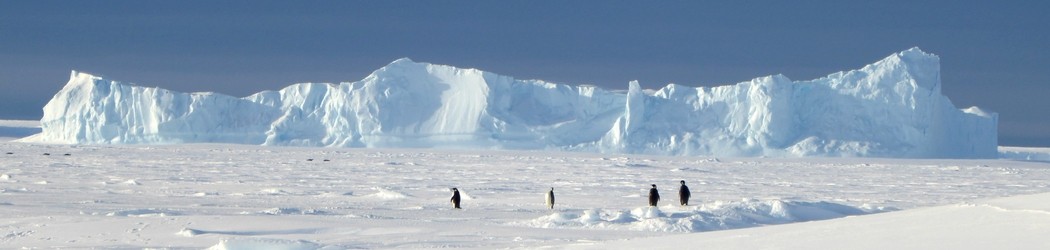
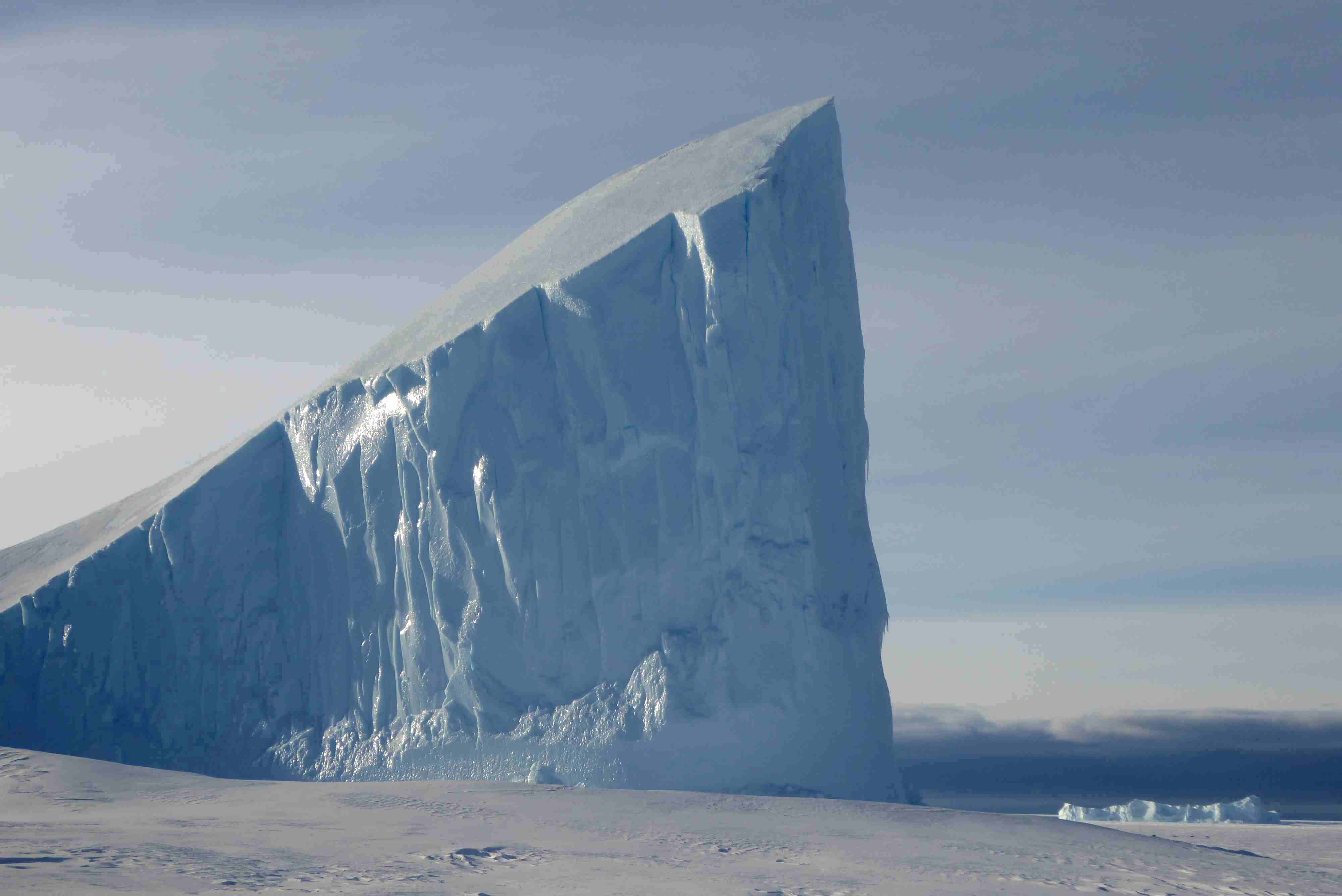 The edge of the ice shelf, the floating glacier ice plate the station is built on (more later) is only 8km (~5 miles), away, by skidoo about 20min. From the edge, a snow ramp that the wind has formed during the many storms leads down to the sea ice below. In late summer, the sea ice here melts completely away, but right now the ice in Atka Bay is still solidly frozen. Many icebergs of bizarre shapes and colors are lying there. We went out on the sea ice to a very beautiful iceberg, parked the skidoos and went for a walk around it. Penguins were travelling all over the place , single or in small groups, either walking or, the faster option: sliding on their bellies, with the feet as “motor” and the wings as “paddles”.
 A cloud bank from the cyclone “ante portas” fringed the horizon, and the shiny white icebergs in the distance stood in sharp contrast to the dark grey clouds. In front of us, the huge iceberg was looming high above us, glistening in the sunshine against a deep blue sky, continuously changing its colors and shape while we were walking around it (at a safe distant, of course, since icebergs are no stable constructs, they move, so the ice surrounding them is thin, and also parts can fall off). It was breathtakingly beautiful! In the distance, Neumayer Station could be seen at the western horizon on the ice shelf, looking rather unreal, like a UFO, and definitely a completely alien object in this environment.
 After our walk we got back on the skidoos and drove to the penguin colony. Thousands of emperor penguins, the biggest penguins in Antarctica, breed here in winter during the cold and dark polar night. Meanwhile the chicks are already fairly big, but they are not molting yet and their grey baby feathers look like soft fur. They have to get their adult black and white feathers before they are able to swim. If the sea ice breaks up too early for them, they’ll die.
While in winter they stand close together in order to stay warm and shield each other from the wind, the birds were now scattered all over the place, standing in little groups, the chicks chirping with their high-pitched baby voices. A sight not many people get to see in their lives. I feel privileged and grateful to be able to work in such an incredible environment. The nightly sun was shining golden on the snow, when we arrived at home on the base. Now we will happily survive a week in the blizzard in front of our computers…


